Home ▸ STM32 LL Drivers ▸
STM32 LL Peripheral Tutorials (UART, SPI, I2C, ADC & More)
The STM32 LL Peripherals section provides step-by-step tutorials on using STM32 Low Layer (LL) drivers to interface and control hardware peripherals efficiently. Unlike HAL, LL drivers offer direct register-level access with minimal overhead, making them ideal for high-performance and real-time embedded applications.
In this page, you will find detailed tutorials on commonly used peripherals such as UART, SPI, I2C, ADC, USB, CAN, and more. Each guide covers initialization, configuration, and data handling using polling, interrupts, and DMA wherever applicable. These tutorials are designed to help you build fast, optimized, and reliable embedded systems using STM32 LL drivers.
STM32 LL UART
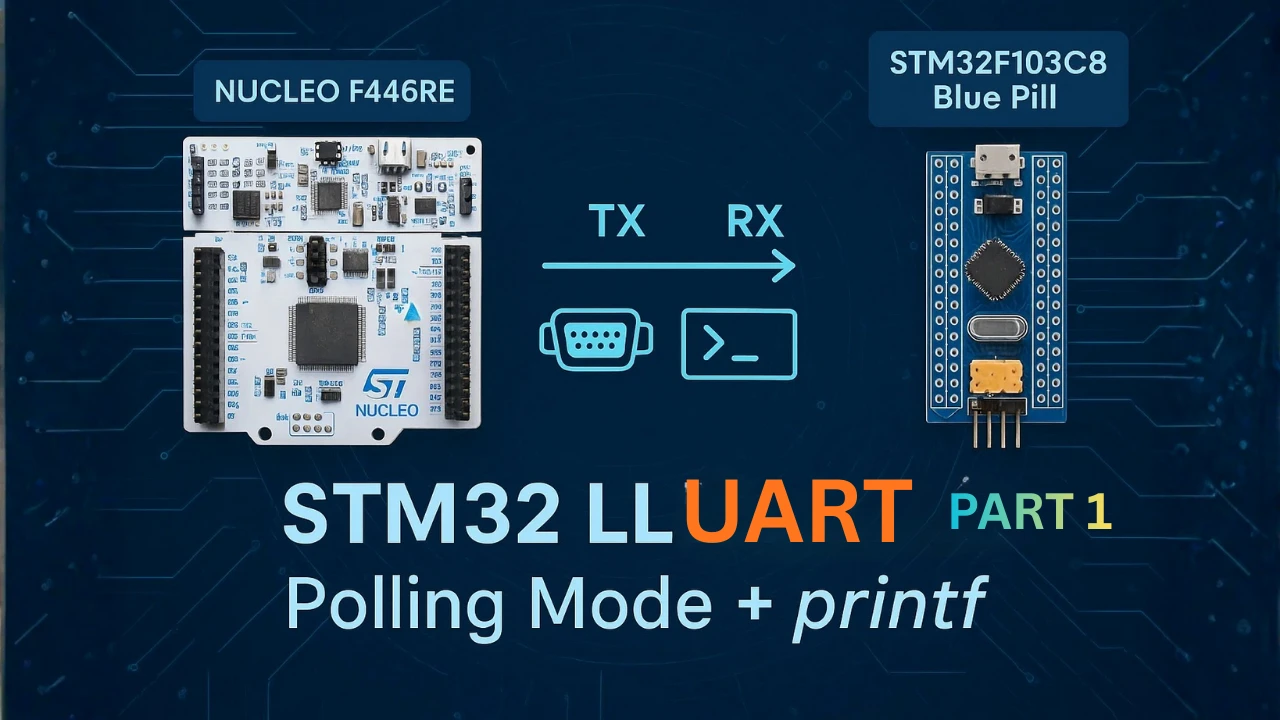
The STM32 LL UART tutorials focus on efficient serial communication using Low Layer drivers. You will learn how to configure UART, transmit and receive data using polling, interrupts, and DMA, and build fast, reliable communication interfaces with minimal overhead.
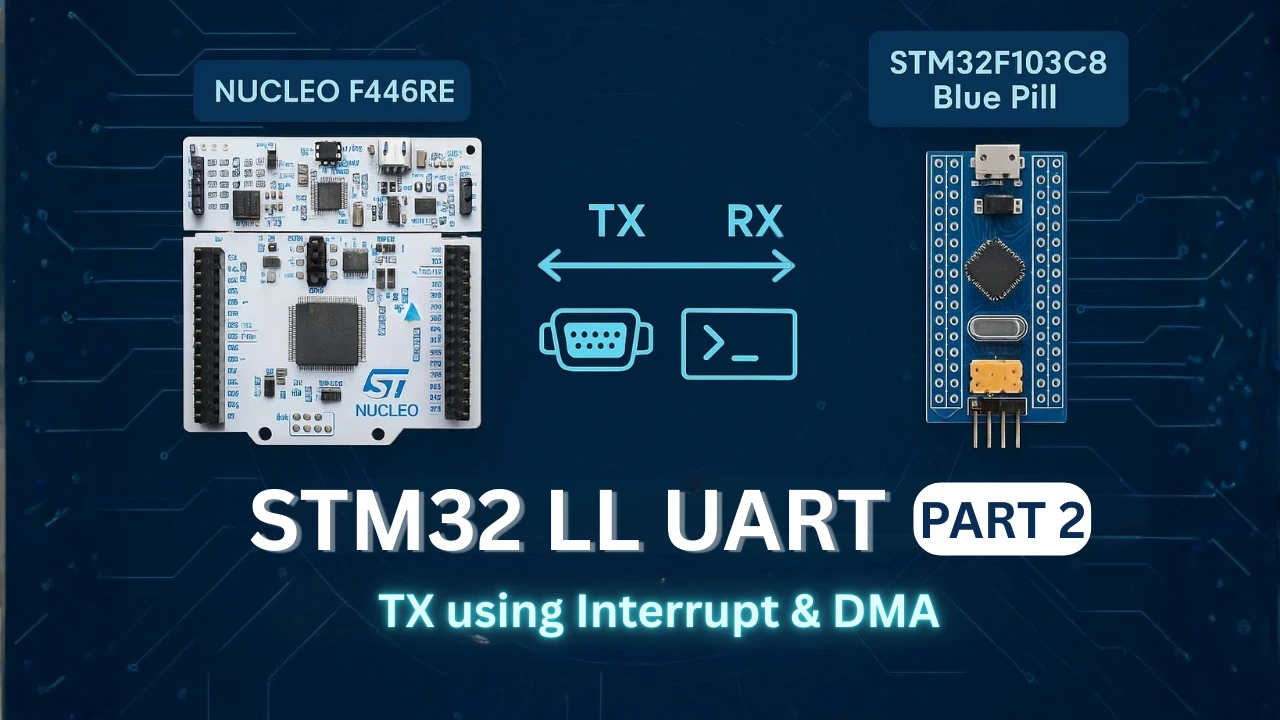
STM32 UART using LL Drivers (Part 2): Transmit using Interrupt & DMA
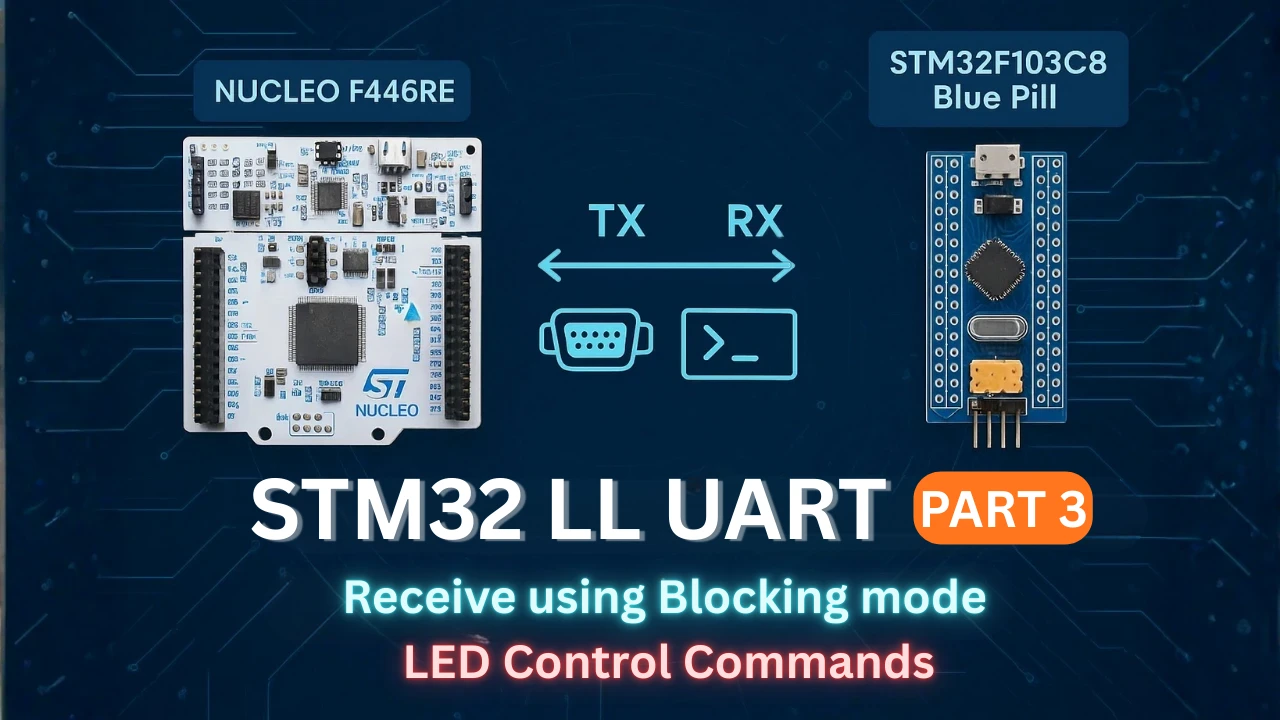
STM32 UART using LL Drivers (Part 3): Receive Data in Blocking Mode
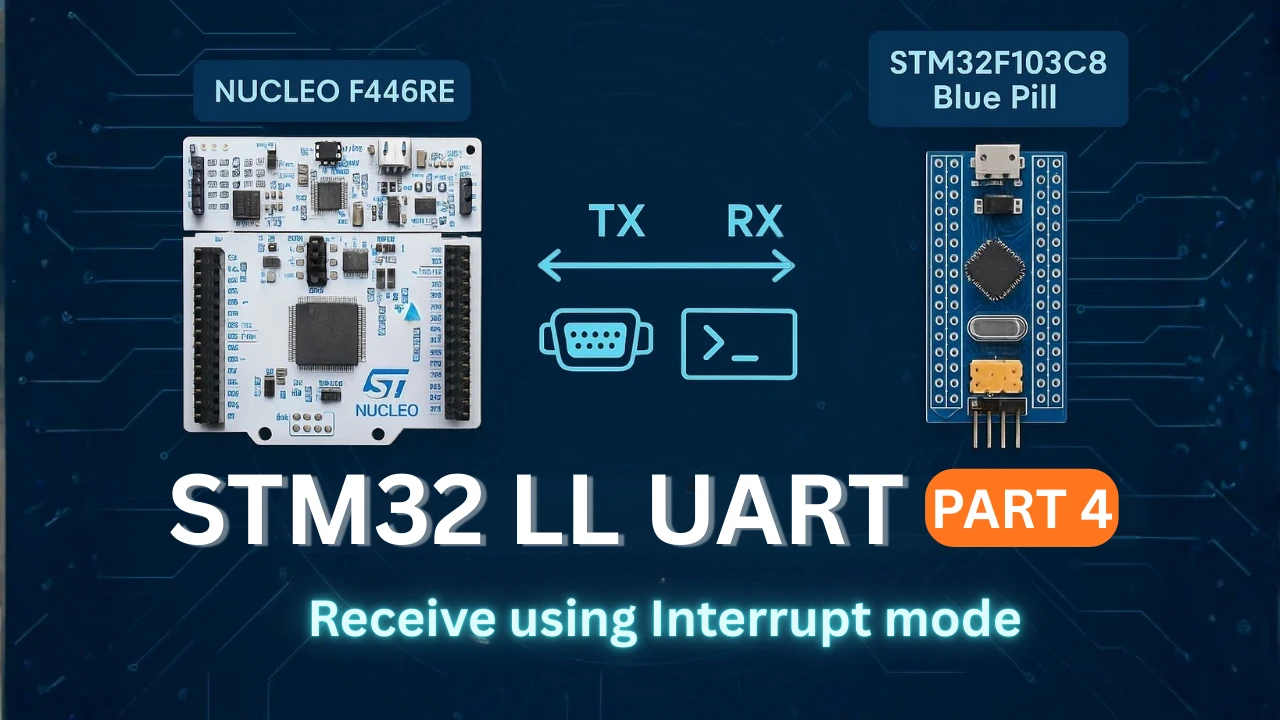
STM32 UART using LL Drivers (Part 4): Receive Data in Interrupt Mode
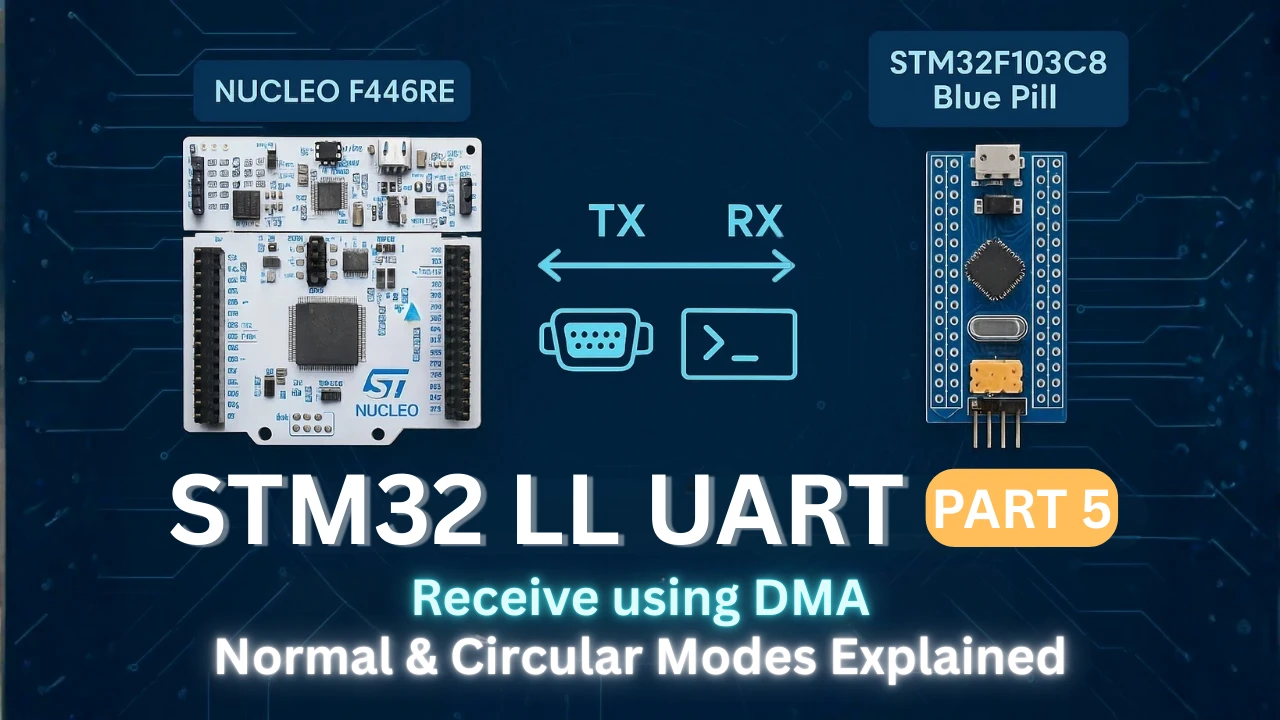
STM32 UART using LL Drivers (Part 5): Receive Using DMA (Normal and Circular Mode)
STM32 LL ADC
The STM32 LL ADC tutorials cover high-speed and precise analog-to-digital conversion using LL drivers. Learn how to configure ADC, read single and multiple channels, and use interrupts and DMA for efficient data acquisition in real-time applications.
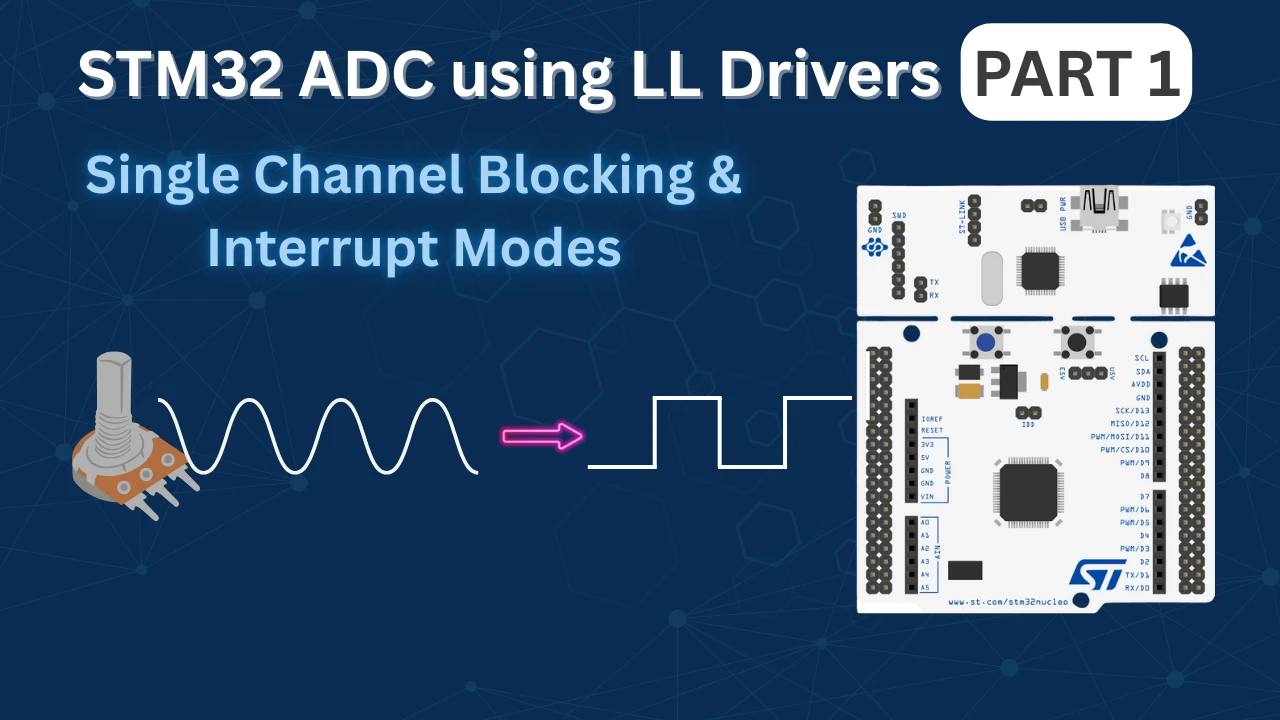
STM32 ADC Using LL Drivers (Part 1): Single Channel Blocking and Interrupt Mode
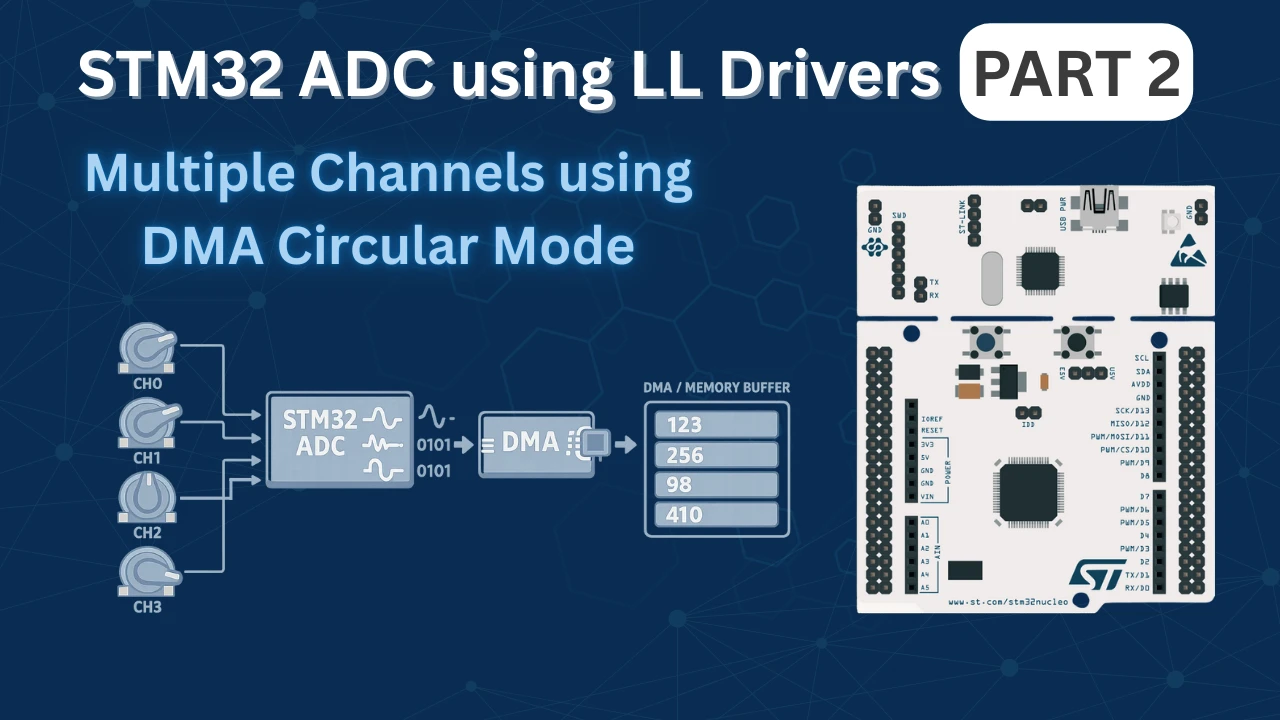
STM32 ADC Using LL Drivers (Part 2): Multiple Channels using DMA Mode
STM32 LL I2C
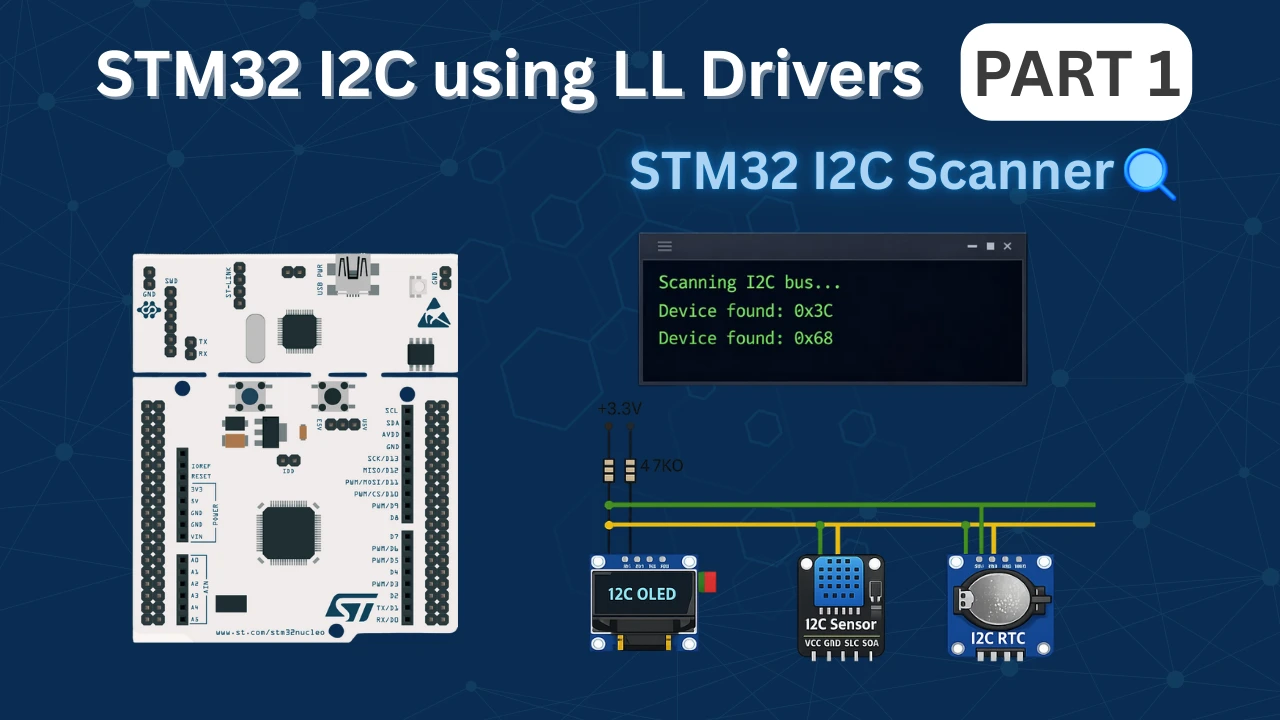
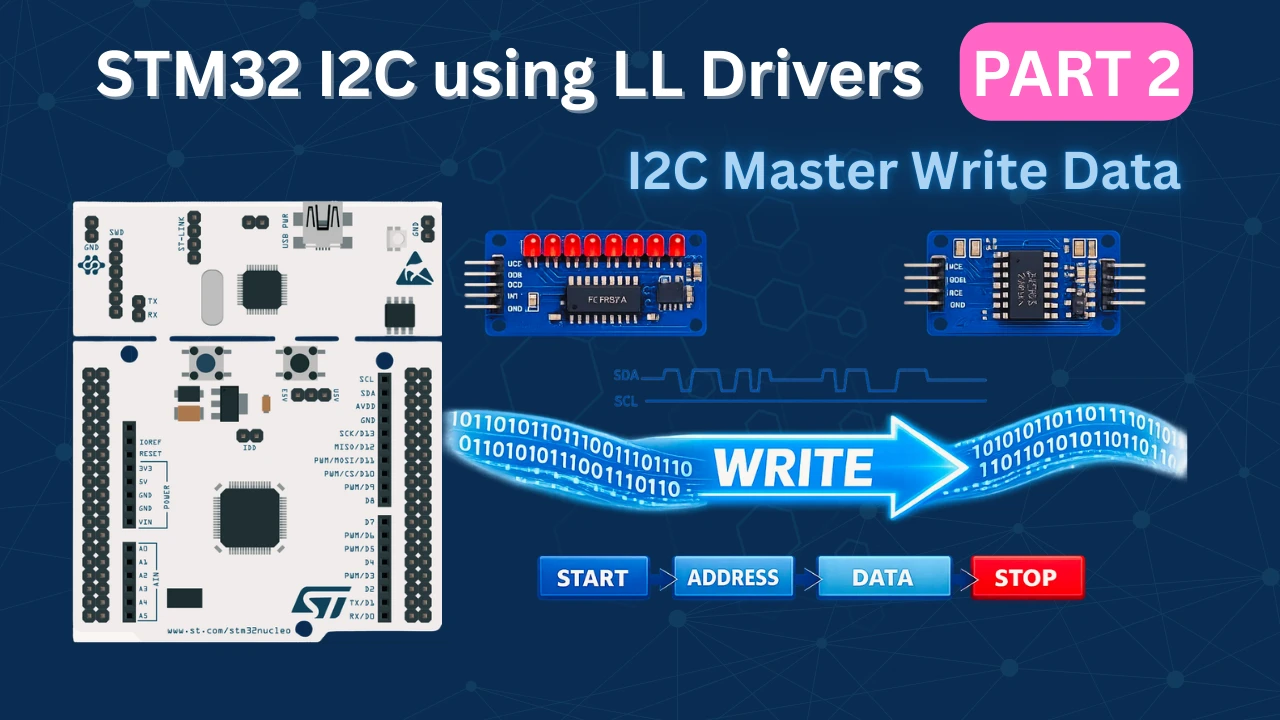
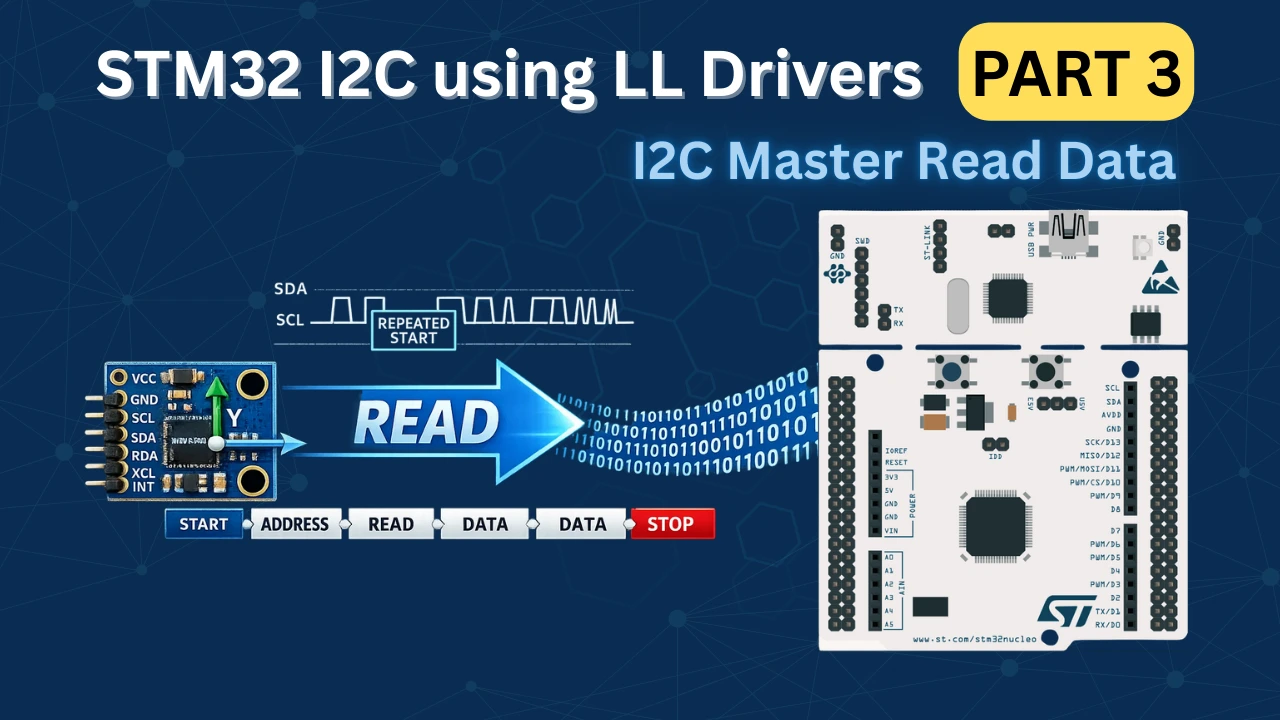
The STM32 LL I2C tutorials guide you through implementing reliable I2C communication using Low Layer drivers. You will learn master and slave configuration, data transfer techniques, and how to use interrupts and DMA for optimized communication with sensors and peripherals.